
Frozen revolves around Elsa’s belief that her powers are “too much”. A sentiment that resonates with the experiences of many women who feel compelled to be restrained and toned down in a world that hesitates to acknowledge their power and demands respect with reluctance. Elsa is isolated within her own home “to protect her family” . She appears occasionally in a poised and controlled manner, often wearing gloves.
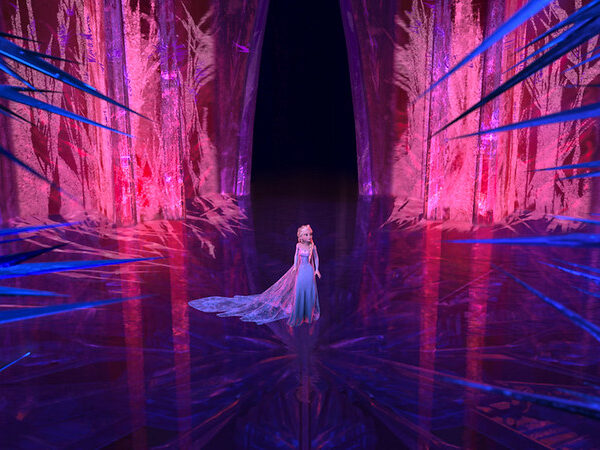
The act of confining Elsa in this manner becomes extremely traumatic, especially for a child. The underlying message is that she sees herself as a danger to others. Further creating a metaphor for the results of when a child is unable to freely express themselves because their identity is deemed as a “problem.” Instead of nurturing and fostering a sense of safety, Elsa runs away and is compared to a dangerous entity. This further traumatizes her and intensifies her powers, which are linked to her emotions and may even contribute to her emotional state.
The entire film is to be seen as a metaphor for the consequences of suppressing oneself, be it in terms of sexuality, misogyny, transsexuality, or other forms of self-expression. Such suppression forms a deep wound within the individual, demanding later attention and resolution. Elsa only liberates herself from the fear of her own power when she chooses to leave everyone behind and embrace solitude. A common preference and occurence for those who have experienced family trauma.
While Elsa’s story primarily mirrors the struggles faced by female children and women, the narrative can resonate across genders, highlighting how societal treatment of basic emotions, whether volatile or not, can be extremely traumatizing for individuals.